An intermediate article about cafés, parks, libraries, and other public places that help people feel connected to their neighborhood.
Основний текст
Читай текст у контексті й натискай підсвічені слова, щоб відкрити переклад, транскрипцію та дії зі словником.
Vocabulary:10(✓0+0-10)
knownlearningnew
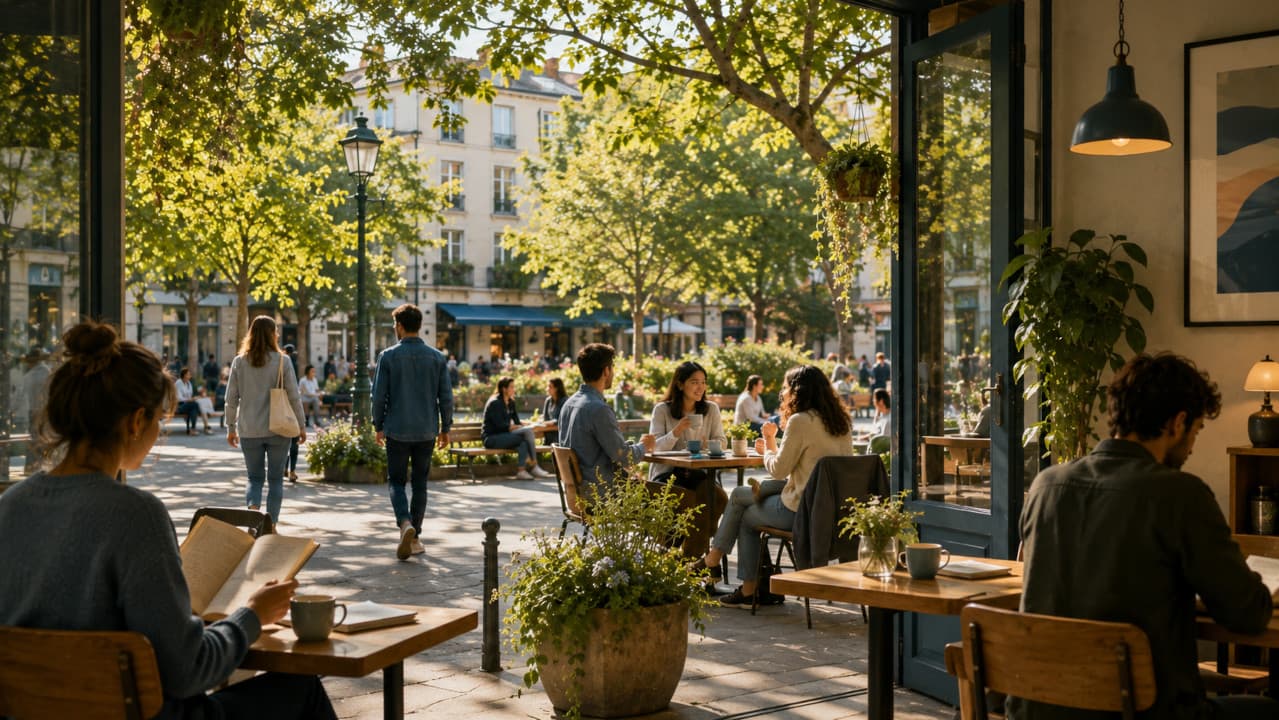
In many neighborhoods, people need more than a home and a workplace. They also need a : a simple where they can spend time without a formal plan. It might be a café, a small park, a library, a community garden, or even a bench near a busy street.
A third place is important because it creates a . When people see the same faces each week, the area begins to feel less anonymous. A short hello from a barista or a neighbor can make a person feel noticed, even on an ordinary day.
These places work best when they are . Nobody has to perform, buy something expensive, or explain why they are there. A student can read quietly, an older person can rest, and two friends can each other by chance. This kind of is hard to plan, but it is valuable.
Third places also . If people visit the same square or café often, they learn the rhythm of the area. They notice when a shop closes, when a new family moves in, or when the park needs care. Small observations can lead to small actions.
Good third places are not only about comfort. They can also support trust. When people meet in a safe public space, they may become more willing to help each other. A neighborhood with trust is better prepared for problems, from a lost dog to a heat wave.
The challenge is that many modern cities make these places harder to keep. Rent is high, public space is limited, and people are often busy. Still, a neighborhood does not need a perfect design to feel alive. It needs places where people can return, pause, and slowly become part of each other’s everyday life.
Third places matter because they give ordinary social life a home. People talk about where they feel comfortable, where they meet friends, and why some places feel welcoming. These are not dramatic moments, but they shape real neighborhoods.
A third place can also help newcomers understand a city. When someone moves to a new area, maps and transport apps are useful, but they do not explain the mood of a neighborhood. Sitting in the same café or visiting the same park can teach small local rules.
The best third places often mix different ages and backgrounds. A parent with a child, a retired neighbor, a remote worker, and a teenager may all use the same space in different ways. They do not need to become close friends for the place to matter.
Design can help, but it cannot create community alone. Comfortable seats, shade, clean toilets, and safe walking routes make people more likely to stay. Still, the real value appears slowly, when people begin to recognize each other and feel that the place belongs to them too.
That is why protecting third places is not only a cultural question. It is also a practical one. A city with more casual meeting points can feel safer, kinder, and easier to live in, especially for people who spend much of the day alone.
Вправи
Перевірте розуміння тексту, ключову лексику та зміст уроку після читання.
Після перегляду визнач, чи правильне твердження
Визначте, чи відповідає кожне твердження статті.
Щоб виконувати завдання, увійдіть в акаунт.
Вибери правильний варіант відповіді
Виберіть правильну відповідь.
Щоб виконувати завдання, увійдіть в акаунт.
Обговорення
щоб коментувати, лайкати відповіді та скаржитися на коментарі.






Обговорення
щоб коментувати, лайкати відповіді та скаржитися на коментарі.